

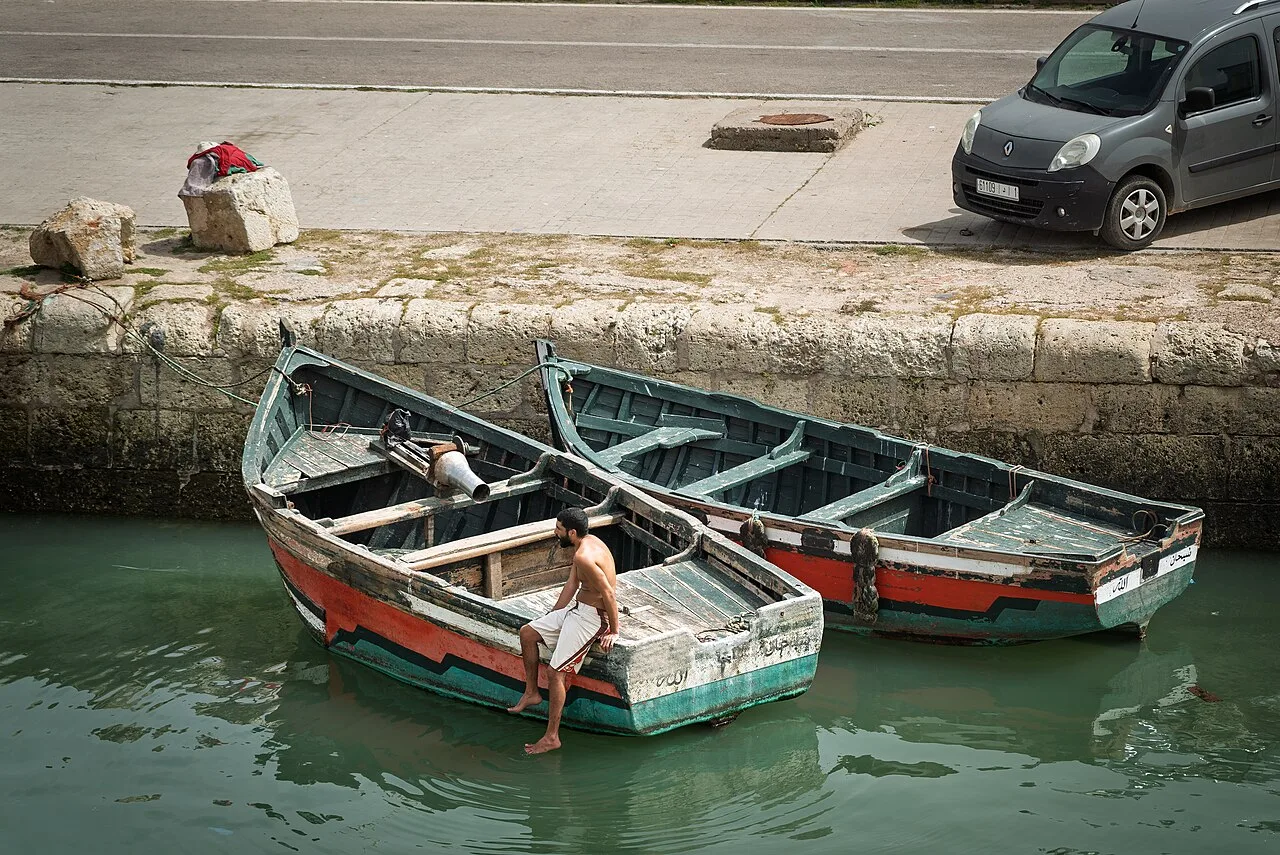
<p>El Jadida’s Portuguese City, also known as Mazagan, sits beside a working harbour. Start outside the old walls so you can see the shape of the fort before its streets close around you. Then decide whether to give your time to the ramparts, the cistern or the streets at ground level. The cistern is a reason to visit, but you can still make sense of Mazagan if its doors are closed.</p>
<h2>Read the fort before you go inside</h2> <p>From a safe public spot near the harbour, look for the way the bastions project from the walls. Imagine what a person standing on one projection could see along the next stretch of wall. That helps explain why the fort isn’t a simple rectangle. <a href="https://whc.unesco.org/en/list/1058/">UNESCO’s World Heritage listing</a> describes Mazagan as an early example of Renaissance fortification shaped by the arrival of artillery. Look for the slope of the wall as well as its height: the two details tell different parts of the story.</p> <p>Once inside, follow the main street toward the seaward side. Give yourself time to notice what’s changed since the fortress was built. The old quarter is still inhabited, and its history continued after the Portuguese left. A doorway, a shopfront and a religious building can sit on the same short stretch of street without belonging to the same period.</p>
<h2>Check the cistern before building your day around it</h2> <p>If it’s open, the cistern changes the scale of the visit: you go from streets and open sky to a space defined by columns and vaults. Look at how the ceiling is supported and how daylight enters. If you’re going mainly for photographs, don’t count on a particular water level or reflection. Ask about access and photography before you travel, especially if you’ve built the rest of the day around that interior.</p> <p>If the cistern is closed, follow the streets toward the seaward side and choose an open rampart section or a public harbour view. Use the <a href="https://www.visitmorocco.com/en/travel/el-jadida-mazagan/medina">Moroccan tourist office’s guide to the old quarter</a> for orientation, and follow local signage for what you can enter on the day.</p>
<h2>What if someone in the group avoids stairs?</h2> <p>Plan the ground-level route first. Ask your driver where the group can get out near the entrance, and how far it is to a place to sit. Treat an upper rampart as optional. If the paving is wet, the wind is strong or the path feels too exposed, stay at street level. Agree on a meeting point before anyone branches off to look for a view. Around the harbour, stay on public paths and give people working with boats and gear room to pass.</p>
<h2>Make it a stop or give it half a day?</h2> <p>For a short stop, prioritise the outside view, the main street and a harbour pause. For a slower visit, add a second vantage point and time for lunch. If you’re starting in Casablanca, <a href="/blog/casablanca-beyond-the-stopover-private-guide">read our Casablanca planning guide</a> before deciding whether to combine the cities. When <a href="/#booking">planning your route with MLV</a>, say whether the cistern is essential and how much walking your party wants. That makes it easier to plan a worthwhile alternative.</p>